
Delaware County Arrest Records and Court Charges
A Delaware County arrest record is created when a law officer takes someone into custody. It captures the arresting agency, the date of the arrest, and the booking that happens at the county jail. An arrest by itself is not a charge. After the arrest, the District Attorney for District 13 reviews the facts and decides what formal charges, if any, to file with the Court Clerk. Those filed charges become the court charge record. In Oklahoma the prosecutor, not the arresting officer, controls which charges move forward in court.
Keeping the two records straight matters. The arrest and booking side sits with the Sheriff and the county jail, and the current jail roster lives on the Delaware County inmate records page. The court charge record is held by the Court Clerk and tracks every charge the prosecutor files. Court charges after an arrest can shift as a case moves, so the clerk's file is the place to confirm them. The full case file, with pleas, hearings, and the final outcome, is covered on the Delaware County criminal court records page.
An arrest record on its own shows the basics of the custody event: the arresting agency, the booking date, and the alleged offense at the time of arrest. It does not decide guilt, and it can list an offense the prosecutor later changes or never files. That gap between the arrest and the filed charge is exactly why the two records are read together.
How to Find Delaware County Arrest Records and Charges
Charges filed after an arrest in Delaware County show up in the District Court case search. The county Court Clerk links the public to On Demand Court Records, known as ODCR, where each case lists its charges under the Offense or Cause field. Booking and custody detail, by contrast, sits in the Sheriff's jail roster rather than the court index.
- Open the ODCR court search and set the court group to Oklahoma District Courts.
- Choose Delaware as the court, then enter a defendant name in Last, First format or a full case number.
- Open the matching case and read the charge list shown under Offense or Cause.
- Check each charge for its statute code, severity level, and current status.
The arrest report behind a charge is held by the Sheriff, and copies are handled through the Delaware County Sheriff records request page.
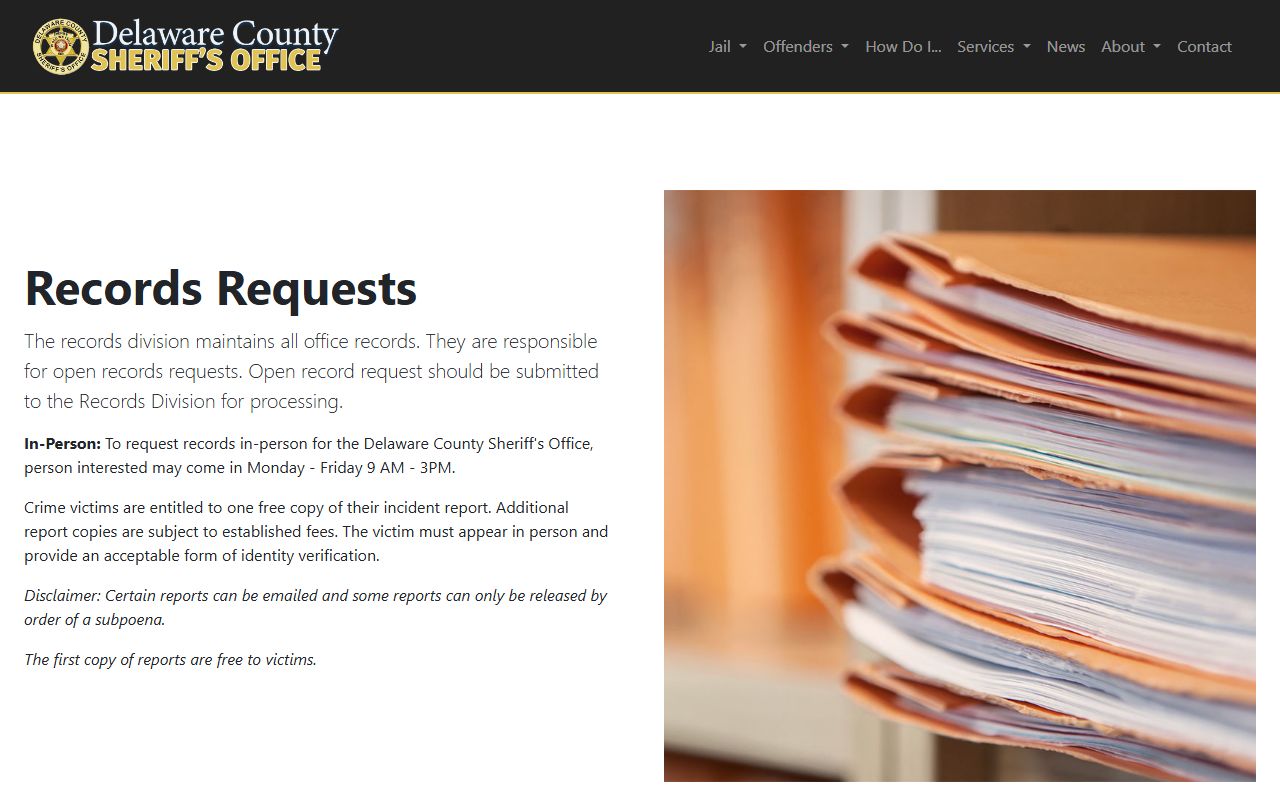
The Records Division takes open records requests in person on weekdays, and some reports are released only by subpoena. For that reason a court charge is best confirmed in the Court Clerk's case file, where the prosecutor's filing controls.
How Charges Are Filed After a Delaware County Arrest
The charge record begins when the prosecutor files a charging document. Oklahoma uses three main types, and the document that opens the case appears in the docket. Most Delaware County felonies and misdemeanors are charged by Information, a sworn accusation that the District Attorney, Douglas S. Pewitt, files directly. A grand jury Indictment is reserved for the most serious matters. The docket may also show an affidavit for arrest, the sworn facts that supported the original arrest.
| Complaint | Information | Indictment | |
|---|---|---|---|
| Filed By | Officer / Prosecutor | District Attorney | Grand Jury |
| Common For | Misdemeanors | Most Oklahoma felonies | Serious felonies |
| Starts | The case | The case | The case |
Once filed, the charge appears in the case docket and updates as the case moves. Common entries include the information, an amended information when the charge changes, the affidavit for arrest, a bench warrant, bond entries, the plea, and the final judgment and sentence. Each entry carries a date, so the docket reads as a timeline of the charge from the arrest forward. The Offense or Cause line at the top of the case names the charge in plain terms, while the entries below show how it was handled.
Delaware County Charge Codes and Severity Levels
Every charge ties back to a specific Oklahoma statute, and the case number carries a prefix that signals the charge level. A felony case uses the CF prefix, a misdemeanor uses CM, and a traffic case uses TR. The Offense or Cause field names the statute and a short description of the alleged conduct. One arrest can produce several separate charges, each listed and tracked on its own. Severity drives much of what follows, from bond to the range of punishment, because a felony and a misdemeanor move through the court in different ways.
The case prefix is the fastest way to read the charge level at a glance.
- CF: criminal felony charge
- CM: criminal misdemeanor charge
- TR: traffic charge filed in District Court
- SW: search warrant matter
- PO: protective order case
A single booking can turn into a felony count, a related misdemeanor, and a traffic charge, each with its own prefix and its own path through the court. Reading the prefix first tells a searcher how serious the matter is before opening the full case.
Charge Status in Delaware County Court Records
Charges rarely stand still. As a case moves, a charge can be amended, reduced, added, dropped, or dismissed, and the docket records each change. An amended information replaces the earlier charge with a new version. A reduced charge drops to a less serious level. The status terms below appear often in Delaware County case files.
| Status | What It Means |
|---|---|
| Pending | The charge is filed and the case is open and not yet resolved. |
| Amended | The prosecutor changed the charge, often through an amended information. |
| Reduced | The charge was lowered to a less serious offense, such as a felony to a misdemeanor. |
| Dropped | The prosecutor decided not to pursue that charge. |
| Dismissed | The court ended the charge, with or without the option to refile it later. |
| Nolle Prosequi | A Latin phrase meaning the prosecutor declines to prosecute the charge. |
Note: Online charge status can lag the official file, so confirm a current charge with the Delaware County Court Clerk at 918-253-4420 before relying on it.
Statewide Charge and Criminal History Lookups
Charges filed in Delaware County also feed Oklahoma's statewide criminal history. The Oklahoma State Bureau of Investigation keeps the central criminal history file, drawn from arrests and court dispositions across the state. For people sentenced to state custody, the Oklahoma Department of Corrections keeps its own offender record, separate from the county jail roster.
The Department of Corrections links its public tools from the Oklahoma Department of Corrections homepage.
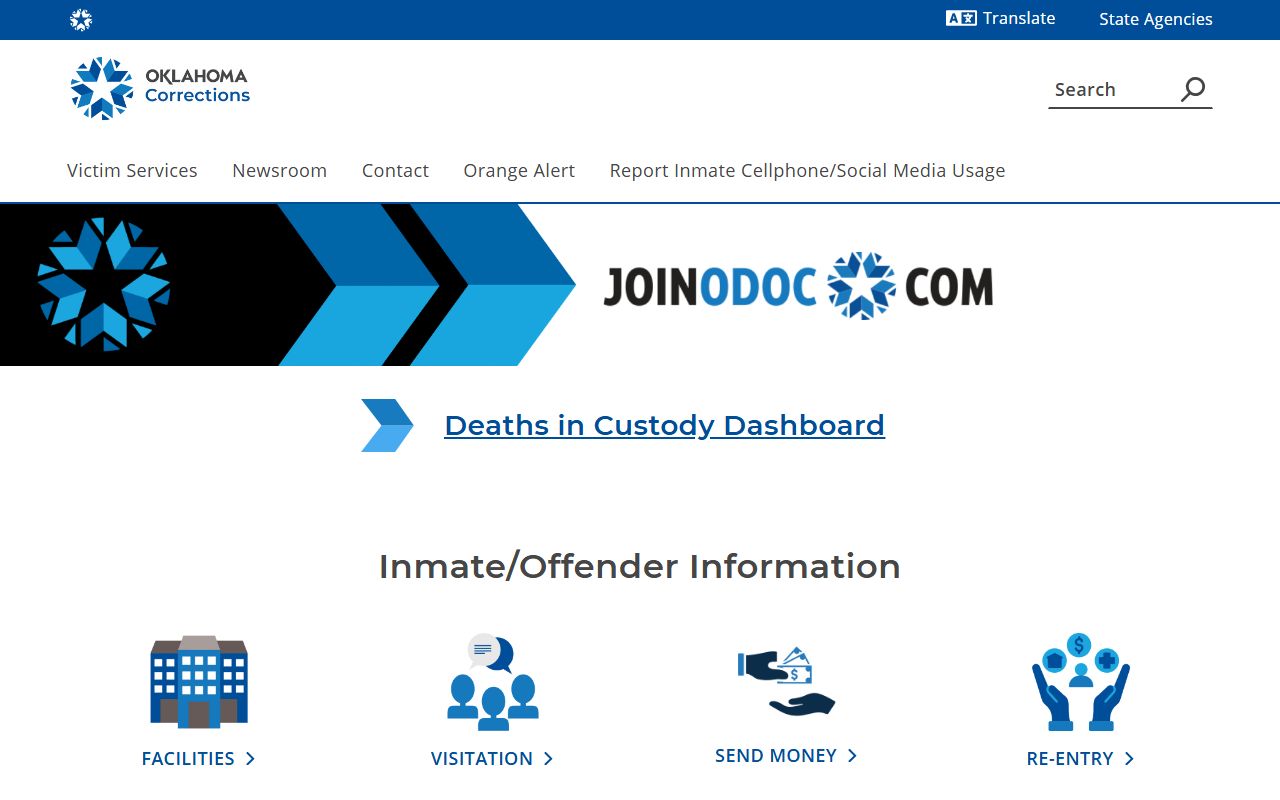
From there the public can reach the offender lookup, the sex offender registry, and open records request links for state custody matters. The offender lookup confirms whether a person convicted on a Delaware County charge is in state prison or under supervision. It is not a county jail roster, and it only covers people who reached state custody.
The Oklahoma DOC offender lookup searches sentenced offenders statewide.
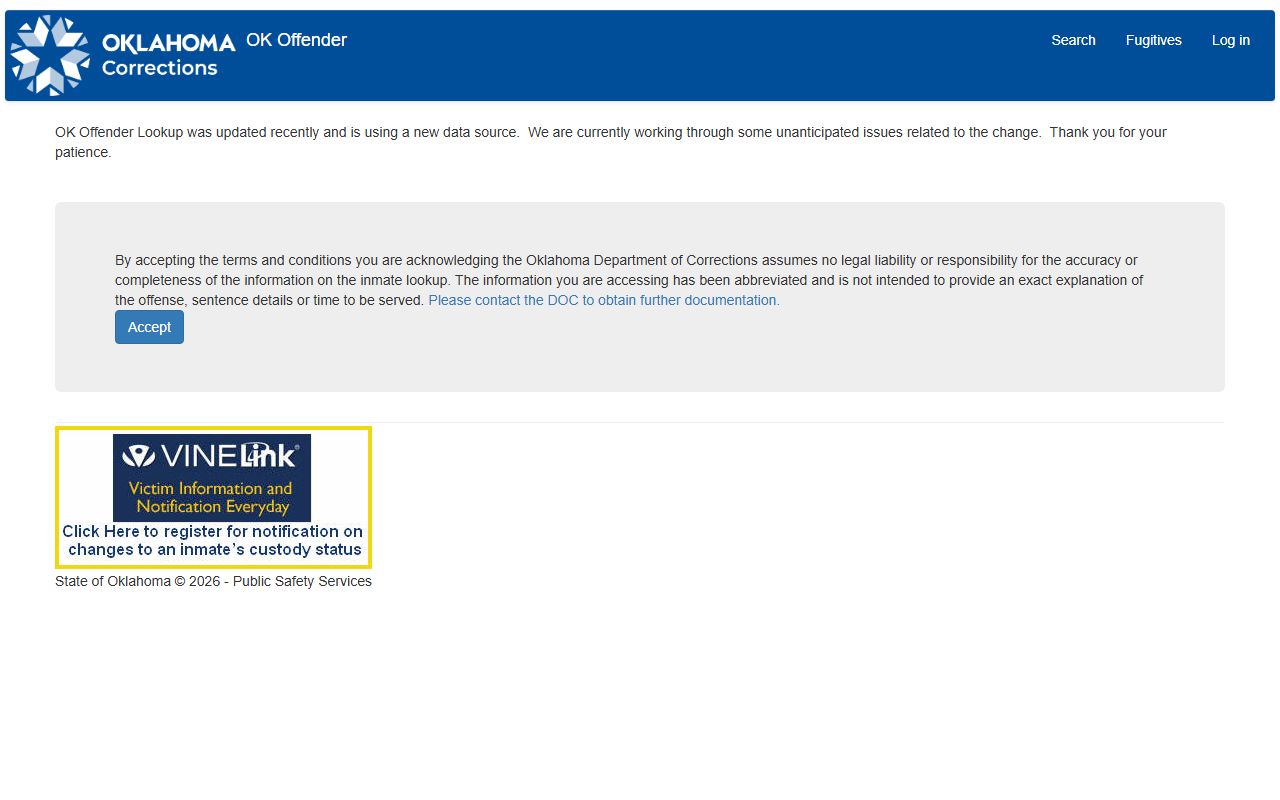
The agency notes its data is abbreviated and may not fully explain a sentence or offense. The court file therefore stays the source of record for the underlying charges.
Charges vs. Convictions
Being charged is not the same as being convicted. A charge is an accusation that the prosecutor must still prove. A conviction comes only after a guilty plea, a no contest plea, or a verdict. Many charges never become convictions, because they are reduced, dismissed, or dropped along the way. An arrest record and a charge record can both exist even when a case ends without any conviction.
| Charge | Conviction | |
|---|---|---|
| Stage | Accusation | Verdict or plea |
| Burden of Proof | Probable cause | Beyond reasonable doubt |
| Public Record | Yes | Yes |
Restricted Charge Records in Delaware County
Not every charge record is open to the public. Juvenile charges are handled apart from adult cases and are generally not public. Records that a court has sealed or expunged drop out of the public index under the terms of the order. Some Sheriff reports tied to an active investigation are released only by subpoena. Personal identifiers in court filings may also be redacted before a record is shown.
Oklahoma's public access framework runs through the Oklahoma Open Records Act, Title 51, which opens most government records but carves out exceptions. Open is not the same as unrestricted.
A person seeking to clear a record starts by pinning down the exact case in the court index or through the Court Clerk. The petition is filed in the District Court that handled the case, and notice goes to the agencies that hold the record. Because eligibility turns on the category of the offense and the outcome, many residents work with an attorney rather than guess at the rules.
Sealed vs. Expunged Records
Sealing and expungement are not the same thing, and Oklahoma sets specific rules for each. Expungement eligibility categories are listed in Title 22, Section 18 of the Oklahoma statutes. The Oklahoma State Bureau of Investigation says it cannot tell a person in advance whether they qualify, so most petitioners file in the District Court where the case occurred or consult an attorney.
| Sealed | Expunged | |
|---|---|---|
| Visibility | Hidden from public view | Treated as though it never existed |
| Law Enforcement | Limited access | Very limited access |
| Eligibility | Set by court order | Set by 22 O.S. Section 18 |
Note: After an expungement order is granted, it must reach the Court Clerk, the Bureau of Investigation, and the arresting agency before the record drops out of public view.
Background Check Considerations
A casual name search is not the same as a formal background check. Federal charges are a separate track from county and state charges, and they do not appear in the Oklahoma court index. For a person in federal custody, the Federal Bureau of Prisons runs a public locator.
Federal custody and charge status can be checked through the Federal Bureau of Prisons inmate locator.
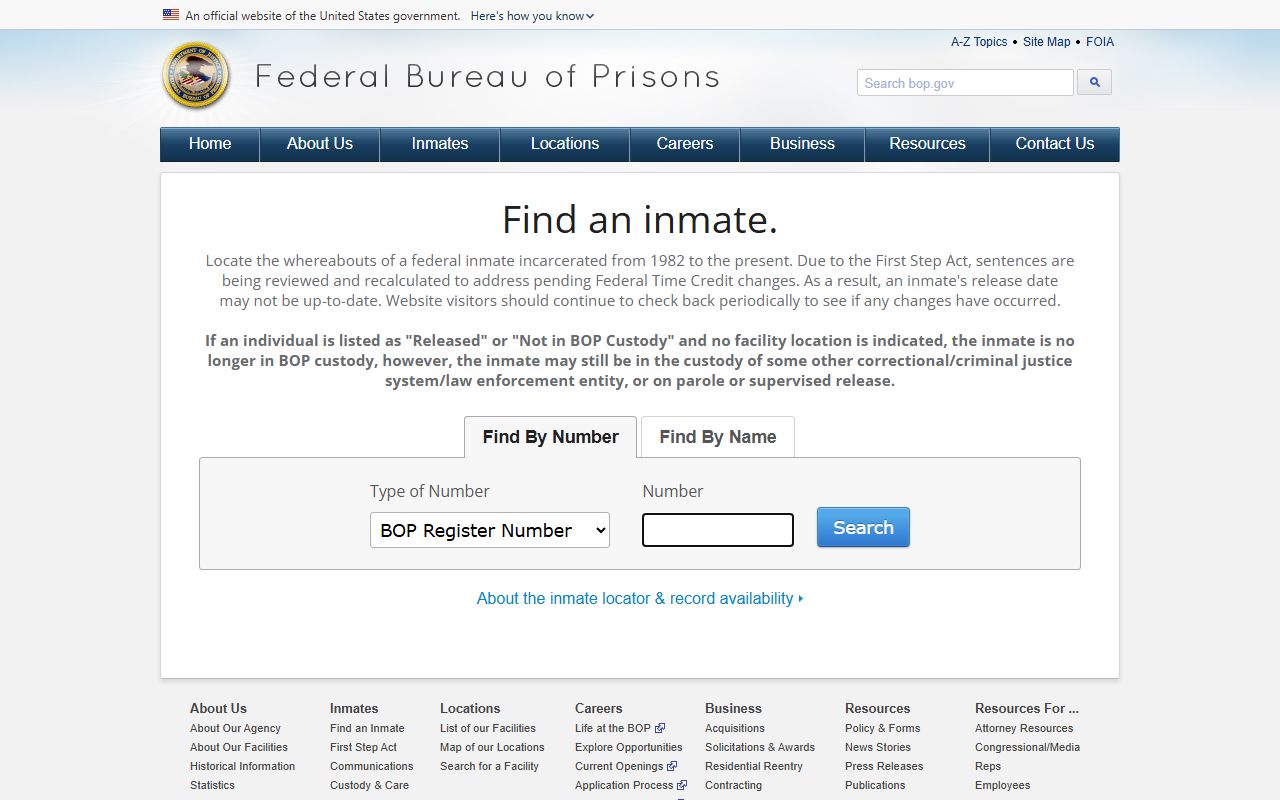
Delaware County sits in the Northern District of Oklahoma, so federal charges from the county run through that court rather than the local District Court. State, county, and federal records each live in their own system.
Important: This site is not a consumer reporting agency under the Fair Credit Reporting Act, and its information cannot be used for employment, housing, credit, or other FCRA-regulated decisions.